vendredi 13 octobre 2017

The roman way, Part. 1


To -400, Romain used runways to move of Rome towards the surrounding cities.  The raid of the  Gauls of Brennus, which will turn out disastrous for Romain in -390, will so be the first revelation of the ineffectiveness of the defensive system of Rome, owed mainly to the slowness of progress of the troops on the paths of the period. The necessity of a better defense allied to a will of expansion and hegemony on Italy leads a Roman Republic still fragile and threatened from the outside to set up a network of robust stone and relay roads, better adapted to its needs. These axes allowed a faster and easier circulation for the storekeepers), but also the quick transfers of the troops.


The first way was built in -312 by Appius Claudius Caecus to connect Rome to Capua : the  Via Appia, the Appian way. At the end of the Roman Republic, the whole territory of the Italian peninsula was provided with these main trunk roads, every road bearing the name of the consul which had created it. These ways were paved only exceptionally: inside cities and in their neighborhoods ( excepted the  Appia way, who was gradually paved on all her route. Somewhere else sands and aggregates were taken in open quarries nearby. It seems that of the ground  was able to cover pavements to limit the discomfort. Somewhere else, these roads were made by sand or  by gravels, all this in a hole and covered with a stony paving stone.


vendredi 6 octobre 2017

Writing test

Consumerism is now a part of our lives. If we look carefully, we can see that everything needs to be bougth : food, water, first necessities ; but also animaals, plants and some rocks which are considered "precious".
We have all fallen into consumerism, but, what does mean consumerism ?

Consumerism is the purpose of making the people buy products for their benefities. But, to buy those products, people have to have the sense of need. That is why the adverstising is generally used : to convince to buy.
The economic interest mater all the world forget the consequences of consumerism ; the pollution of our planet, and its destruction.
This is why I agree with this idea, to create the Buy Nothing Day. We don't know yet, but all what we do will have consequences in the future, and if we continue to support the economic market ( I mean, in the extreme ) which I sinceraly think doesn't care about ecology and saving the planet, because they would lose money, and prefer having benefits than helping someone who needs their help.

The act of buying something is not something wrong, but, like all things in the world, the extrems are bad. Buying is not bad, buy anything for anything reason without thinking where the product has been done, without interest if it respects the environment or not, and without knowing if it is really important to you, it is.

Comment quote of Obama speech

Good evening, Lourdes.

I chose this quote ( a bit too long, but I liked and it is why I use it) :

"But at the end of the day, we can have the most dedicated teachers, the most supportive parents, the best schools in the world, and none of it will make a difference, none of it will matter unless all of you fulfill your responsibilities."

I think this quote is very interesting, and especially real. No matter what the others do for you, if you don't want, if you don't have determination, all those efforts would be useless. Sincerely, I believe we don't know the chance to have all these opportunities and I don't understand yet why some pupils and students ignore it, because they don't know the importance of studying, they are bored by something that they would have to be tankful, because in the past, some people fought for these rigths. But however students let behind the studies so precious and important for them, for their future.
But, in fact, not all of us can, or want to do studies, but perhaps they would want to go in another way. You are not forced to do studies to have success, you can do practice lessons for doing what you want to for example. Studies are not always necessary, but we don't know what will be made the future, and maybe these studies would help you, when, more young, you though they were useless and boring.
So that is my conclusion : do what you want to do, in the condition it allows you to have a future. Study what you want to study, because we are free to have preferences and have a job we like, because there is nothing worse than having a work you hate : you would not feel good and anyone would be. For that, for having a work you like, for having a future, for living correctly for you and your family, don't wait more, and take the chance : study ! 

Cheers,

Marylou.

mercredi 7 juin 2017

Final reflection 1BAT

1.  Can you see an improvement on your level of English in the past year/s?  Where, for example?

Actually I think that my level in english improved on the final of 4t ESO. And I think ( and I hope ) that I have improved again, and continue to improve.

2. Which activity best shows your level of English?

Blog yoursays, watching films / videos, class songs, kahoot and composition writing in class.

3. Which activities were really USEFUL for you to improve your English? Why?

Duolingo is a tool very great, I liked to use it, because you can learn very well the vocabulary, the syntaxe...
Oral exams helped me too to improve, because it is the purpose of a language to be spoken, and for me, speak well ( without so much accent for example ) is very important.
The grammar book was good because doing the exercices you learn unconsciously and it really serves.
On the blog, I liked so much the yoursays, because you can talk about what you want, what you like ; and when you talk about what you like you will be more interested to run throught it.

4. Which activities did you NOT find useful to learn English? Why not?

I didn't like so much the vocabulary extension dossier because sometimes the explanations on it were'nt very clear, and this annoyed me a little bit.
On the blog, I didn't like the news, because I wasn't very inspired and interested about this.

5. Which activities would like to do again next year to keep on improving your English?

I would like to do the grammar book, do compositions writing in class, the yoursays, reading the books, the oral exams and watching films and videos.

6. Open Comments (...More ideas, suggestions for activities, suggestion for new topics...)

I think it would be interesting to do some task about the dreams, the subconscious and the psychology, because it is a topic complex and it is funny to see what people think of it.

mercredi 31 mai 2017

Formal letter

199, Requesens
Empuriabrava
Girona
12th October, 2027


Parco archeologico Pompei
127, Via Roma
Pompei, Italy


Dear Sir or Madam,

I am writing to you because I would like to apply for a position. I am 26 years old and have just finished the degree in Archeology in the University, and I would like to offer my service to your organization.

I feel that I would be suitable for this job because history is for me a passion. I studied a lot and I did some practice classes where I could learn on the job and get experience. I am very responsible, hard working and very careful in my work.

I look forward to hearing for you in a near future. I have enclosed my CV and would be happy to attend an interview at the time convenient for you. Thank you for considering my application.

Yours faithfully,

Marylou Courard.


vendredi 26 mai 2017

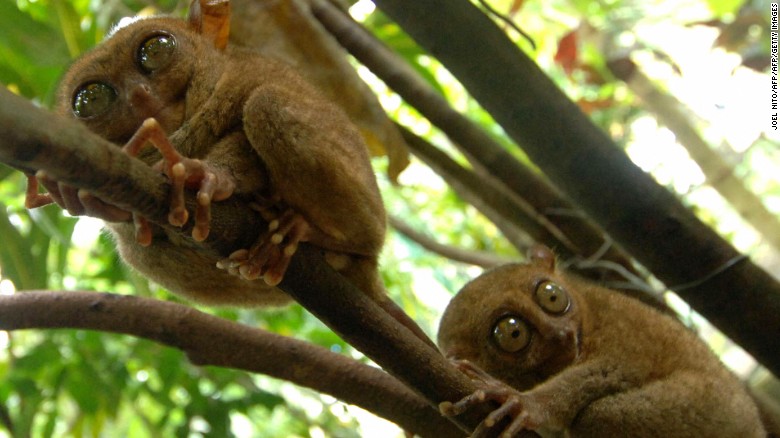
Philippine tarsier

With its teeny tiny body, bat-like ears and bug eyes, the Philippine tarsier might be the most peculiar primate on earth.
It's also the second-smallest, weighing just three to five ounces and measuring up to six inches long.
Just how tiny is that? About the size of an adult palm.
Native to the southeastern Philippines, the 45-million-year-old species faces a triple threat to its existence: low birth rates, exploitative tourism and habitat destruction from logging and mining.
According to the International Primate Protection League, there are between 5,000 and 10,000 Philippine tarsiers left in the wild and the number is plummeting.
In recent years, the Philippine tarsier was named a specially protected faunal species by the government and designated as "near threatened" by the IUCN Red List of Threatened Species.
"Part of the problem is these animals require a specific habitat," Joannie Mary Cabillo, of the Philippine Tarsier Foundation, tells CNN.

"They only live in forests with bushy vegetation, and lots of insects to eat. They don't have that many homes in the world."

In the town of Corella on Bohol Island, the Philippine Tarsier Foundation set up shop in 1996, aiming to provide a natural habitat for the animals and an opportunity to study their behavior.

The Foundation looks after roughly 100 of these animals across an 8.4-hectare forested sanctuary, with one open observational enclosure that allows tarsiers to come and go as they please.
"Since tarsiers are so rare, many people try to exploit them -- turning tarsiers into an attraction," explains Cabillo.
"Thousands of tourists come to Bohol to see these creatures every year. But they're often under stressful and unnatural conditions. They're being shown off during the day, when they should be sleeping."
If the animals are up all day, they can't hunt at night, which causes a destructive cycle.
"They'll be hungry and unhappy, and struggle to reproduce," says Cabillo.
"The less the human intervention for the tarsiers, the better."


http://www.bbc.co.uk/nature/life/Tarsier


Biodiversity can offer protection to weakies species

If you pit a pair of gladiators, one strong and one weak, against each other 10 times the outcome will likely be the same every time: the stronger competitor will defeat the weak. But if you add into the field additional competitors of varying strength levels, even the weakest competitors might be able to survive -- if only because they're able to find a quiet corner to hide.


The same is true in the natural world, where in some ecosystems species compete with others for the space to survive and reproduce, according to a long-held scientific theory.
In a new study Yale researchers illustrate that, in the case of fungal communities, maintaining a diverse collection of species indeed not only safeguards weaker species but also protects the genetic diversity of the larger community.

Or, as the researchers suggest, biodiversity begets biodiversity. Understanding this phenomenon, they say, will help in efforts to protect some of the world's most threatened ecosystems, including coral reefs.
For the study, the researchers observed interactions between 37 distinct types of wood-decay fungi, which are any species of fungi that grow on dead wood. Unlike other plants, fungi species grow toward other species and compete for space. "They're much more like territorial carnivores," said Dan Maynard, a doctoral student at the Yale School of Forestry & Environmental Studies (F&ES) and lead author of the study. . "They have a territory from which they gather resources, and they want to protect that territory very strongly."
In a series of experiments the researchers placed pairs of fungal species on opposite ends of a 10-centimeter Petri dish -- more than 600 separate combinations -- and then watched as the opposing species grew toward the empty space in the middle. Typically the fungi would meet near the center after about 20 days, after which they would begin an "interference competition" in which each species sought to overtake the other and claim available space.
Often the competitions would end in a stalemate. But in many cases the stronger species would overtake the other, growing on top of and then decomposing the weaker species.
The researchers then ranked the competing species based on a variety of traits -- including how fast they grew, the density of their biomass, and the types of enzymes they produced (which presumably were used to eliminate each other). They noticed that those species that grew fast, developed greater density, and produced more varied enzymes were most successful overall.
Once they ranked the species in terms of their relative strengths and competitive traits, they modeled how they would compete within a larger community comprised of many different interacting species.
They then ran those results through a simulation model that predicted how the different species would perform within larger, more diverse communities -- including, for example, landscapes including three, five, 10 and more additional fungi species.
According to their results, common traits emerged among species that were able to dominate single competitors -- just as strong gladiators all presumably shared similar competitive strategies and traits. But when additional species were added to the community, those competitive advantages meant less, allowing even the weakest species to maintain a foothold.


https://nioo.knaw.nl/en/news/diversity-begets-diversity-competition-space