Affichage des articles dont le libellé est 1BAT. Afficher tous les articles

mercredi 7 juin 2017

Final reflection 1BAT

1.  Can you see an improvement on your level of English in the past year/s?  Where, for example?

Actually I think that my level in english improved on the final of 4t ESO. And I think ( and I hope ) that I have improved again, and continue to improve.

2. Which activity best shows your level of English?

Blog yoursays, watching films / videos, class songs, kahoot and composition writing in class.

3. Which activities were really USEFUL for you to improve your English? Why?

Duolingo is a tool very great, I liked to use it, because you can learn very well the vocabulary, the syntaxe...
Oral exams helped me too to improve, because it is the purpose of a language to be spoken, and for me, speak well ( without so much accent for example ) is very important.
The grammar book was good because doing the exercices you learn unconsciously and it really serves.
On the blog, I liked so much the yoursays, because you can talk about what you want, what you like ; and when you talk about what you like you will be more interested to run throught it.

4. Which activities did you NOT find useful to learn English? Why not?

I didn't like so much the vocabulary extension dossier because sometimes the explanations on it were'nt very clear, and this annoyed me a little bit.
On the blog, I didn't like the news, because I wasn't very inspired and interested about this.

5. Which activities would like to do again next year to keep on improving your English?

I would like to do the grammar book, do compositions writing in class, the yoursays, reading the books, the oral exams and watching films and videos.

6. Open Comments (...More ideas, suggestions for activities, suggestion for new topics...)

I think it would be interesting to do some task about the dreams, the subconscious and the psychology, because it is a topic complex and it is funny to see what people think of it.

mercredi 31 mai 2017

Formal letter

199, Requesens
Empuriabrava
Girona
12th October, 2027


Parco archeologico Pompei
127, Via Roma
Pompei, Italy


Dear Sir or Madam,

I am writing to you because I would like to apply for a position. I am 26 years old and have just finished the degree in Archeology in the University, and I would like to offer my service to your organization.

I feel that I would be suitable for this job because history is for me a passion. I studied a lot and I did some practice classes where I could learn on the job and get experience. I am very responsible, hard working and very careful in my work.

I look forward to hearing for you in a near future. I have enclosed my CV and would be happy to attend an interview at the time convenient for you. Thank you for considering my application.

Yours faithfully,

Marylou Courard.


vendredi 26 mai 2017

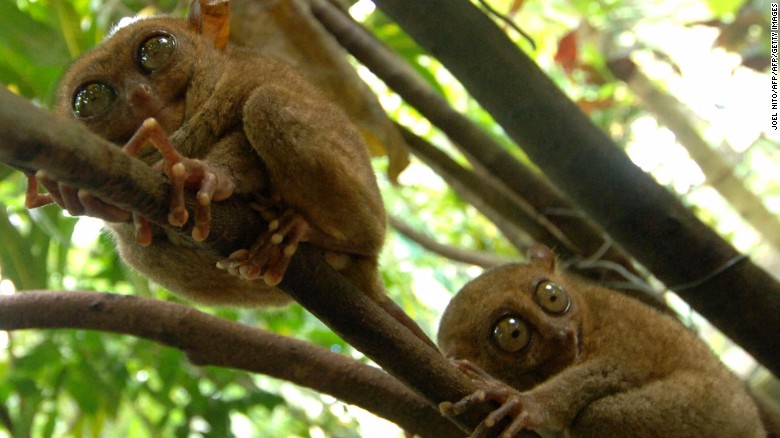
Philippine tarsier

With its teeny tiny body, bat-like ears and bug eyes, the Philippine tarsier might be the most peculiar primate on earth.
It's also the second-smallest, weighing just three to five ounces and measuring up to six inches long.
Just how tiny is that? About the size of an adult palm.
Native to the southeastern Philippines, the 45-million-year-old species faces a triple threat to its existence: low birth rates, exploitative tourism and habitat destruction from logging and mining.
According to the International Primate Protection League, there are between 5,000 and 10,000 Philippine tarsiers left in the wild and the number is plummeting.
In recent years, the Philippine tarsier was named a specially protected faunal species by the government and designated as "near threatened" by the IUCN Red List of Threatened Species.
"Part of the problem is these animals require a specific habitat," Joannie Mary Cabillo, of the Philippine Tarsier Foundation, tells CNN.

"They only live in forests with bushy vegetation, and lots of insects to eat. They don't have that many homes in the world."

In the town of Corella on Bohol Island, the Philippine Tarsier Foundation set up shop in 1996, aiming to provide a natural habitat for the animals and an opportunity to study their behavior.

The Foundation looks after roughly 100 of these animals across an 8.4-hectare forested sanctuary, with one open observational enclosure that allows tarsiers to come and go as they please.
"Since tarsiers are so rare, many people try to exploit them -- turning tarsiers into an attraction," explains Cabillo.
"Thousands of tourists come to Bohol to see these creatures every year. But they're often under stressful and unnatural conditions. They're being shown off during the day, when they should be sleeping."
If the animals are up all day, they can't hunt at night, which causes a destructive cycle.
"They'll be hungry and unhappy, and struggle to reproduce," says Cabillo.
"The less the human intervention for the tarsiers, the better."


http://www.bbc.co.uk/nature/life/Tarsier


Biodiversity can offer protection to weakies species

If you pit a pair of gladiators, one strong and one weak, against each other 10 times the outcome will likely be the same every time: the stronger competitor will defeat the weak. But if you add into the field additional competitors of varying strength levels, even the weakest competitors might be able to survive -- if only because they're able to find a quiet corner to hide.


The same is true in the natural world, where in some ecosystems species compete with others for the space to survive and reproduce, according to a long-held scientific theory.
In a new study Yale researchers illustrate that, in the case of fungal communities, maintaining a diverse collection of species indeed not only safeguards weaker species but also protects the genetic diversity of the larger community.

Or, as the researchers suggest, biodiversity begets biodiversity. Understanding this phenomenon, they say, will help in efforts to protect some of the world's most threatened ecosystems, including coral reefs.
For the study, the researchers observed interactions between 37 distinct types of wood-decay fungi, which are any species of fungi that grow on dead wood. Unlike other plants, fungi species grow toward other species and compete for space. "They're much more like territorial carnivores," said Dan Maynard, a doctoral student at the Yale School of Forestry & Environmental Studies (F&ES) and lead author of the study. . "They have a territory from which they gather resources, and they want to protect that territory very strongly."
In a series of experiments the researchers placed pairs of fungal species on opposite ends of a 10-centimeter Petri dish -- more than 600 separate combinations -- and then watched as the opposing species grew toward the empty space in the middle. Typically the fungi would meet near the center after about 20 days, after which they would begin an "interference competition" in which each species sought to overtake the other and claim available space.
Often the competitions would end in a stalemate. But in many cases the stronger species would overtake the other, growing on top of and then decomposing the weaker species.
The researchers then ranked the competing species based on a variety of traits -- including how fast they grew, the density of their biomass, and the types of enzymes they produced (which presumably were used to eliminate each other). They noticed that those species that grew fast, developed greater density, and produced more varied enzymes were most successful overall.
Once they ranked the species in terms of their relative strengths and competitive traits, they modeled how they would compete within a larger community comprised of many different interacting species.
They then ran those results through a simulation model that predicted how the different species would perform within larger, more diverse communities -- including, for example, landscapes including three, five, 10 and more additional fungi species.
According to their results, common traits emerged among species that were able to dominate single competitors -- just as strong gladiators all presumably shared similar competitive strategies and traits. But when additional species were added to the community, those competitive advantages meant less, allowing even the weakest species to maintain a foothold.


https://nioo.knaw.nl/en/news/diversity-begets-diversity-competition-space

Clean the air

A Russian architect hopes to realise his dream of a skyscraper that can filter dirty air - but is it just a pipe dream?
"When I read the news about people selling oxygen in canisters in Chinese cities... I think sometime as early as 2025, my project will be realised," says Russian architect Alexei Umarov, 31, the man behind the idea of a skyscraper which he says could clean the polluted air surrounding it.


Alexei lives in the Russian city of Khabarovsk on the border with China. He says that his project, the HyperFilter skyscraper, looks something like a giant tree, which he claims can suck in and purify the city's polluted air.
He is not the only visionary to be seduced by the desire to construct smog-eating buildings.
Many architects have been attracted to the idea of using materials and devices which could play a part in removing impurities to improve the air we breathe.
One of the most high-profile is the Dutch designer Daan Roosegaarde, who has created towers in cities like Beijing which have been billed as filtering impurities in the air.
The fact that no serious evidence exists that such constructions can make a significant dent in pollution levels has not stopped architects from taking out their pens and getting down to the design board.


https://www.currentnewsbulletin.com/wp-content/uploads/2017/03/Could-a-Russian-architect039s-skyscraper-clean-the-air.jpg

Thoiry and the Rhinoceros

A zoo director says a 5-year-old rhinoceros at the wildlife park he runs near Paris has been shot three times in the head by assailants who stole the animal’s horn.
Thierry Duguet told The Associated Press that poachers broke into the Thoiry Zoo overnight and used a chain saw to remove the horn from the rhino named Vince. Zookeepers discovered his carcass Tuesday in the rhinoceros’ enclosure.
Duguet says police are investigating and the suspects still are at large.


The Thoiry Zoo is famous for its safari park that can only be explored from inside a vehicle.
According to Le Parisien newspaper, a rhinoceros horn can be sold for up to 40,000 euros on the black market because of a strong demand linked to the belief that the horns have aphrodisiac powers.


http://www.lemonde.fr/biodiversite/article/2017/03/08/enquete-difficile-sur-le-rhinoceros-tue-au-parc-zoologique-de-thoiry_5091536_1652692.html

mercredi 17 mai 2017

Medieval Latin

Medieval Latin had ceased to be a living language and was instead a scholarly language of the minority of educated men in medieval Europe used in official documents more than for everyday communication. That resulted in two major features of Medieval Latin compared with Classical Latin. First, many authors attempted to "show off" their knowledge of Classical Latin by using rare or archaic constructions, sometimes anachronistically (haphazardly mixing constructions from Republican and Imperial Latin, which in reality existed centuries apart). Second, many lesser scholars had a limited grasp of "proper" Latin or were increasingly influenced by Vulgar Latin, which was mutating into the Romance languages.

Word order usually tended towards that of the vernacular language of the author, not the artificial and polished word order of Classical Latin. Conversely, an erudite scholar might attempt to "show off" by intentionally constructing a very complicated sentence. Because Latin is an inflected language, it is technically possible to place related words at opposite ends of a paragraph-long sentence, and owing to the complexity of doing so, it was seen by some as a sign of great skill.
Typically, prepositions are used much more frequently (as in modern Romance languages) for greater clarity, instead of using the ablative case alone. Further, in Classical Latin the subject of a verb was often left implied, unless it was being stressed: videt = "he sees". For clarity, Medieval Latin more frequently includes an explicit subject: is videt = "he sees" without necessarily stressing the subject.
Various changes occurred in vocabulary, and certain words were mixed into different declensions or conjugations. Many new compound verbs were formed. Some words retained their original structure but drastically changed in meaning: animositas specifically means "wrath" in Medieval Latin while in Classical Latin, it generally referred to "high spirits, excited spirits" of any kind.


Owing to heavy use of biblical terms, there was a large influx of new words borrowed from Greek and Hebrew and even some grammatical influences. That obviously largely occurred among priests and scholars, not the laity. In general, it is difficult to express abstract concepts in Latin, as many scholars admitted. For example, Plato's abstract concept of "the Truth" had to be expressed in Latin as "what is always true". Medieval scholars and theologians, translating both the Bible and Greek philosophers into Latin out of the Koine and Classical Greek, cobbled together many new abstract concept words in Latin.

Many striking differences between classical and medieval Latin are found in orthography. Perhaps the most striking difference is that medieval manuscripts used a wide range of abbreviations by means of superscripts, special characters etc.: for instance the letters "n" and "s" were often omitted and replaced by a diacritical mark above the preceding or following letter. Apart from this, some of the most frequently occurring differences are as follows. Clearly many of these would have been influenced by the spelling, and indeed pronunciation, of the vernacular language, and thus varied between different European countries.

Following the Carolingian reforms of the 9th century, Carolingian minuscule was widely adopted, leading to a clear differentiation between capital and lowercase letters.
A partial or full differentiation between v and u, and between j and i.
The diphthong ae is usually collapsed and simply written as e (or e caudata, ę); for example, puellae might be written puelle (or puellę). The same happens with the diphthong oe, for example in pena, Edipus, from poena, Oedipus. This feature is already found on coin inscriptions of the 4th century (e.g. reipublice for reipublicae). Conversely, an original e in Classical Latin was often represented by ae or oe (e.g. aecclesia and coena), also reflected in English spellings such as foetus.
Because of a severe decline in the knowledge of Greek, in loanwords and foreign names from or transmitted through Greek, y and i might be used more or less interchangeably: Ysidorus, Egiptus, from Isidorus, Aegyptus. This is also found in pure Latin words: ocius ("more swiftly") appears as ocyus and silva as sylva, this last being a form which survived into the 18th century and so became embedded in modern botanical Latin (also cf. Pennsylvania).
h might be lost, so that habere becomes abere, or mihi becomes mi (the latter also occurred in Classical Latin); or mihi may be written michi, indicating that the h had come to be pronounced as k or perhaps kh. This pronunciation is not found in Classical Latin.
The loss of h in pronunciation also led to the addition of h in writing where it did not previously belong, especially in the vicinity of r, such as chorona for corona, a tendency also sometimes seen in Classical Latin.
-ti- before a vowel is often written as -ci- [tsi], so that divitiae becomes diviciae (or divicie), tertius becomes tercius, vitium vicium.
The combination mn might have another plosive inserted, so that alumnus becomes alumpnus, somnus sompnus.
Single consonants were often doubled, or vice versa, so that tranquillitas becomes tranquilitas and Africa becomes Affrica.
Syncopation became more frequent: vi, especially in verbs in the perfect tense, might be lost, so that novisse becomes nosse (this occurred in Classical Latin as well but was much more frequent in medieval Latin).
These orthographical differences were often due to changes in pronunciation or, as in the previous example, morphology, which authors reflected in their writing. By the 16th century, Erasmus complained that speakers from different countries were unable to understand each other's form of Latin.[3]

The gradual changes in Latin did not escape the notice of contemporaries. Petrarch, writing in the 14th century, complained about this linguistic "decline", which helped fuel his general dissatisfaction with his own era.

Vulgar Latin

The original written Latin language (what is today referred to as Classical Latin) was adapted from the actual spoken language of the Latins, with some minor modifications, long before the rise of the Roman Empire. As with many languages, over time the spoken vulgar language diverged from the written language with the written language remaining somewhat static. During the classical period spoken (Vulgar) Latin still remained largely common across the Empire, some minor dialectal differences notwithstanding.


The collapse of the Western Roman Empire rapidly began to change this. The former western provinces became increasingly isolated from the Eastern Roman Empire, leading to a rapid divergence in the Latin spoken on either side. In the West an even more complex transformation was occurring. A blending of cultures was occurring between the former Roman citizens who were fluent in the proper Latin speech (which was already substantially different from Classical Latin), and the new Gothic rulers who, though largely Latinised, tended to speak Latin poorly, speaking what could be considered a creole of Latin and their Germanic mother tongue.

classical latin

Classical Latin is the modern term used to describe the form of the Latin language recognized as standard by writers of the late Roman Republic and the Roman Empire. In some later periods, it was regarded as "good" Latin, with later versions being viewed as debased or corrupt. The word Latin is now taken by default as meaning "Classical Latin", so that, for example, modern Latin textbooks describe classical Latin.

Good Latin in philology is "classical" Latin literature. The term refers to the canonicity of works of literature written in Latin in the late Roman Republic and the early to middle Roman Empire: "that is to say, that of belonging to an exclusive group of authors (or works) that were considered to be emblematic of a certain genre." The term classicus (masculine plural classici) was devised by the Romans themselves to translate Greek γκριθέντες (enkrithentes), "select", referring to authors who wrote in Greek that were considered model. Before then, classis, in addition to being a naval fleet, was a social class in one of the diachronic divisions of Roman society according to property ownership by the Roman constitution. The word is a transliteration of Greek κλσις (klēsis) "calling", used to rank army draftees by property from first to fifth class.


mercredi 10 mai 2017

Gap year

A gap year, for me, is a period when you enjoy to discover somewhere, something diferent. Usually, after a gap year, people is more mature and transformed by the experience they live.

So, what would be my gap year ? 


I'm not sure of what I want to do yet, but I think I would go to Italy and Greece, because I love the history and culture which these countries have.


Why would I do there ?

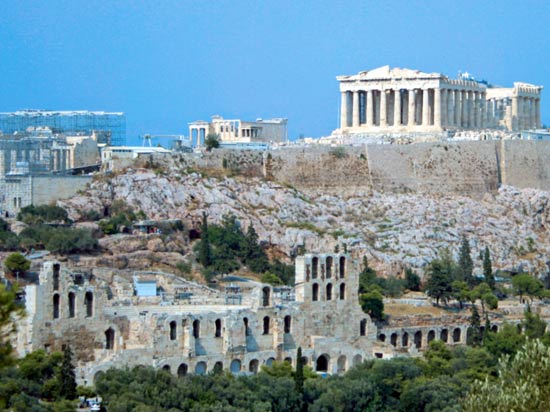
First, I think I would visit ruins and archeological sites, like Rome, Pompeii, Herculanum, or Delphe, Athenas, Delos, Thera... without forgive cities where the renaissance was important, like Florence, Sienna... but also small villages unknows by tourists. Meet people and his tradition, share knowledges and stories.
But I would like to help further animal protection association, because there are too many miserable animals, and I think that protect and help animals turns us more human.


I think ( and I would like to ) my gap year lasts more or less 2 month : one month for Greece, and one for Italy. 
The issue is that I don´t have enough money, because I am not working, and sinceraly I have never worked before. Wathever, this gap year will be organized when I can.

For my gap year I think it is necessary to be patient, and determinate about what you want to do. Inspiration is something important when you are doing what you have always dreamt. To be interested about the culture, and the history of the country, and just let the river take you.

In my previous posts, it is obvious I am in love about ancient times. This gap year would help me, because I will study later archeology, and what is better to an archelogist to go in Greece or Italy ? 


The Roman Medecine, Part 4

The right of the doctors

The laws

Naturally, from the arrival of the Greeks and their scientific but disastrous medicine practised by incompetent people, Romain quickly realized that the power detained by the doctors was dangerous, and that it was necessary to punish the doctors committing of serious mistakes. Laws exist for it.

Lex Aquilia

This law, dated 286 b. J.C., what explains (among others) what risks a doctor who makes a grave error by treating a slave: this law engages the responsibility of the doctor - and of the owner of the doctor if the latter is a slave - towards the owner of the badly looked slave. Generally, the doctor or his owner adjust the conflict by paying a certain sum to the owner of the slave.

Lex Cornelia de iniuriis

The law Cornelia, proposed by Sylla in 84 b. J.C., punishes every person responsible for a manslaughter. So, a doctor who uses voluntarily some poison on a patient or who hurts him with the aim of killing him, but also a person who makes or sells some poison or dangerous medicine, is criminal. Will then come to be added to this law the ban on the castration and on the abortion.

Other texts of law

Antoninus Pius limits the number of doctors by city. Severus Alexander's law modifies the status of the doctors of the emperor who pass of the rank of servants in that of the state employees, and touch fixed fees. 
The law encourages the doctor to demand unpaid fees.

The doctors's hierarchy

All the doctors of the Roman territory are not equal. The Roman law establishes a hierarchy between them. This organization is described in the Codex Theodosianus. it is about a collection collecting all the Roman laws created since the reign of emperor Constantine the Great. it was drafted by Theodosius II and came into effect in 439 ap. J.C.. The leader of the Roman medical device is the comes archiatorum held by the law to be noble. In the lower rank is archiatri. These characters, paid by the State, are in charge of watching the doctors in the zone which was attributed to them and to adjust the medical conflicts. Numerous privileges are granted to them: they do not pay taxes, cannot be threatened by the law and their house cannot be occupied by military troops.

There are two types of archiatri : the archiatri palatii who preside to the palace, and the archiatri populares who provide medical care free in the most deprived. Finally, the other doctors do not benefit from the same privileges as archiatri and is under their supervision as said previously.

The medical oaths

Under Ancient Rome, several oaths must be pronounced by certain healthcare professionals. These texts are printed by a certain morality and are vector of several values as the respect for his teacher of medicine, the equality between all the patients, the respect for these, the non-transparency of its personal opinions while we exercise, the professional secrecy... The most known and most used by these oaths is the Hippocratic oath, actually created by Hippocrates, whom the doctors have to recite in front of a jury today having defended their thesis of the end of studies. it was updated and the Public health code is widely inspired by it. 
But other oaths are today compulsory: the oath of the Apothecaries of Galius which the pharmacists have to pronounce and a version of the Hippocratic oath adapted to the dental medicine or to the prison medicine are necessary for the exercise of the jobs by pharmacist, by dentist and by doctor of prisons.
Our medical oaths are so inherited from doctors of the Antiquity.

Medical education

Naturally, everything aspiring doctor has, as nowadays, need for a robust education to be able to exercise his job in a effective way. The Aesculapium deliver classes of medicine, but this learning is expensive. Most of the doctors thus learn their art with a Master. They are then to the rank of discens and can reach that of medicus having ended their apprenticeship and enough spread their clientele.

Conclusion

The works of the Greek and Roman doctors of the Antiquity influenced the medicine as a whole. Indeed, it is thanks to them that the medicine became a rigorous and scientific discipline, and either a mixture of superstitions. In the Middle Ages, no major step forward was made in the medical domain: the medicine stagnated. The doctors had to conform to the Roman Catholic Church in West: it was it which managed hospitals and universities of medicine, and many practices as the dissection were forbidden the professionals of the medicine. Really, the works of the big doctors were a recognized authority at the doctor's until the Renaissance, during which several theories were declared inaccurate, even if the old texts were always the bases on which they leaned. Finally, it is that from the XVIIIth century when the medicine was revolutionized and set a new face, among others thanks to the highlighting of the existence of germs, to the evolution of the surgical practices which makes them less dangerous and more adapted to the problems of the patient, to the creation of devices using the electricity, then the electronics who allow an automated, mechanized treatment. In spite of these decisive changes, the Roman doctors left indelible tracks in our current practices, for example through the etymology of certain terms, the medical oaths, the caduceus... And in the course of the evolution of the medicine, we shall always know how to remember their indisputable contribution in our scientific knowledge.

vendredi 10 mars 2017

The extinction of animals

The extinction of animals is a problem more serious that we can think. 
Our planet is now on the midst of its sixth mass extinction of plants and animals, scientists estimate we are now losing species at 1.000 to 10.000 times the background rate, with literaly dozens going extinct every day.


And all is almost entirely caused by us.
In fact, 99% of currently threatened species are at risk from human activities, primarily those driving habitat loss, introduction of exotic species, and global warming.


Our world is going very bad, and it is our fault.
If we continue to destroy nature, to hunt, to poach, we will loose our animals definitely, without forget the plants and the corals, very important for live.
The nature is a chain, if we broke it, it will have consequences.
 This is not ignoring problems that they disapear.
And broking this chain, we murder the nature, and if we murder the nature, we will murder us too.


Some words :

midst : the position of occuring in the middle of a period.
 rate : degree of speed or progress
to poach : to hunter illegaly

JK Rowling


Her name is Joanne Kathleen Rowling borned in july 1965, she’s 51 years old and she is a British writer and producer, best known as the creator of the Harry Potter series of books.
Physically blond with straight thin hair.  Her eyes are blue and she has almond eyes. The veins of the neck are very prolonged.
Her height is 1.65m. She has a very white skin.
She has a daughter she love very much.
She began to write at 20 years old and the was very poor before Harry Potter became to be famous. She have a lot of imagination, and she will continue to make us dreaming.
She has some wrinkles around her mouth and her eyes but she is still beautiful. She have a good nature, and she is very funny. On his Twitter, we can see how she answers at the internet trolls, and she does it very well !


vendredi 3 février 2017

The Roman Medecine, Part 3

Medecine and Greco-Roman mythology

As in most of the disciplines that they practise on a daily basis, Romain connect several gods with the medicine, especially as it was perceived for a long time by them as something being only of the religion and the superstitions. The god of the medicine strictly speaking is the same at the Greeks or at Romain, the simply named in a different way: Asclepius / Aesculapius. 

Esculape is thus a specific god in the medicine and in the health (besides the medicine, the god Apollo possesses diverse attributes which make that he is not exclusively the god of the medicine).

The legend of Esculape

There are several legends around the character of Asclepius, but I am going to mention only the most known. Asclepius is thus the son of the god Apollo and of the mortal Coronis his mistress. When her mother is pregnant of him, she deceives Apollo with an other one mortal of the name of Ischys, a prince of Arcadia. Apollo does not delay learning the infidelity of Coronis: a white crow comes to announce it to him. In his anger, the god colors with black his feathers. Diane, twin sister of Apollo, punishes the unfaithful by killing her of one of her arrows. Apollo takes care personally of Ischys. But the god realizes that Coronis was pregnant: he thus extracts the baby, Asclepius, from the stomach of his ex-mistress sacrificed on the funeral stake.

Asclepius is entrusted to the centaur Chiron asked to take care of his education. This centaur, excellent teacher, having learnt the medicine of Apollo, transmits himself his medical knowledge to the child. So, Asclepius reaches a high level in the practice of the medicine: he knows how to prepare medicine, potions and ointments, but also use the surgery or recognize the plants which allow to cure. The goddess Athena offers to Asclepius a particular blood: that of the Gorgon Meduse. it confers him the power of life and death on whoever. He uses it frequently to resuscitate mythological characters. However, Hades does not see it of a good eye: as god of Hell, he becomes alarmed to see that the deaths are more and more rare. Zeus remedies it in a radical way: he eliminates Asclepius by using the lightning of Cyclopses. Apollo, naturally saddened by the death of his son, eliminates in return the Cyclopses. For this crime, Zeus condemns him to serve king Admetus of Epirus in slave. Zeus decides nevertheless to make Asclepius be reborn as immortal god of the Medicine, a completely friendly god and quack, very popular in the Greek and Roman peoples.

The worship of Asclepius

The cult of the god Asclepius appeared, from the classic age, in Greece. It is admitted that the first temple ( Asklepeion) which is dedicated to him is in the city of Trikkala, in the Thessaly. There is also Asklepeion to Pergame, the home town of Galius, as well as in Athens and to Cos. But the big center of the worship of Asclépios is localized to Epidaurus, place of birth supposed by the god. In 293 b. J. C., after a terrible epidemic of plague, is built the first Roman temple dedicated to the god Asclepius, on the island of the Tiber. The visitors of the temple hope most of the time for the cure of a disease. To do it, they have to cleanse themselves (fast, diet), then, entered the sanctuary browsed by not venomous snakes symbols of the god, to sleep inside: the god Asclepius intervenes in their dreams to give them the procedure. So the god is sensible to practise the medicine by "incubation". A sick person cured of its evil thanks the god by making him offering of a votive relief (relief offered to a god in sign of Gratitude). Sometimes the access to the temple is paying.

The Attributes of Asclepius

As all the gods were the most worshipped by the roman time, Asclepius possesses particular attributes. The most known by these attributes is his favorite animal, the snake, to such a point that a sort of snakes (not venomous) is called snake of Asclepius. This animal is by his side in almost all the representations of the god. Fast, very agile and endowed with a very good appetite, this snake possesses all the qualities to embody the health. Furthermore, the regular metamorphosis of the reptile symbolizes the regeneration of the life. 
As seen previously, inside Asclepius Epidaurus's sanctuary are several snakes of this type. Other one of the animals of preference of Asclepius is the mole. It is possible that in its oldest shape, Asclepius was a "god-mole". Even more connected with the earth  than the snake, the mole can most probably be one of the attributes of Esculape. There is another third animal connected to Asclepius, it is about the cock. This gallinacean symbolizes the day renewal. The sick cured by the god of the medicine sacrifice him generally a cock.

Iconography of Asclepius

The iconography is a study of the various representations of a person, an object... 

Asclepius is often represented at Roman, very often under the shape of a sculpture. Old, the god remains by means of a stick all around of which is tangled up a snake. He possesses a long beard. Sometimes, his daughter Salus and Panacea and his son Telesphoros accompany him.

The family of Asclepius

The god Asclepius has a wife, Epione, a girl of king of Cos, and not less than seven children, among whom four girls and three sons: Panacea, Salus, Iaso, Aglaea, Machao, Polidarius and Telesphoros.

-Panacea is the goddess of the universal Cure.
-Salus, relatively important character of the medicine, is the goddess of the health, of the cleanliness and the hygiene (this last term was formed from its Greek name, Hygieia).
-Iaso is the Quack.
-Machaon and Polidarius become famous during the Trojan War during which they behave as real heroes quacks just like their father.
-Finally, Telesphoros is the god of the convalescence. Which is the state of a person who recovers of a disease.

The "snake of Asclepius" in certain emblems

The snake, the emblem of Asclepius, is widely associated with the medicine today and is used to symbolize the medical professions through the caduceus of the order of the Doctors of France for example. But the snake of Asclepius is a part of other emblems of medical professions: so the emblem of the Pharmacists consists of a snake of Asclepius getting entangled around a cup of Hygieia. Replace the cup of Hygieia by a microscope, a diapason or an egg-shaped shape and you will obtain respectively emblems of analysis laboratories medical, hearing-aid specialists and midwives. The mirror which sometimes appears on these symbols represents the caution necessary for this kind of job.


Other divinities attached to the medicine

Esculape, his children and his father Apollon are not the only gods who concern the medicine: indeed, minor, very specialized and often local divinities, are worshipped in the Roman territory.

Here are some of these divinities:

-Angitia, goddess of the Cure and the Witchcraft, more particularly known in the center of Italy.
-Carna, protective divinity of the body, the internal organs in particula.
-Clitumnus, divinity quack of Umbria.
-Endovelicus, god of the Health and the Spanish and Portuguese Well-being, joined into the Roman mythology after the conquest of the Iberian Peninsula by Romans.
-Febris, protective goddess fighting against the fever and against the malaria.
-Veiovis, Etruscan goddess bound to the health.
-Lucina, divinity protecting the women who deliver, and the childbirth.

vendredi 20 janvier 2017

Hello

I don't know what to say so I say you hello !

Here in spain it's raining.
So sad.

But, I'm happy because I'm not outside...


I am sorry but I am very boring today !

I think I will finish the part 3 of the Roman medicine and not tell this nonsenses ! 

See ya !


Fantastic Beasts and where to find them

Fantastic Beasts and Where to Find Them is an all-new adventure returning us to the 
wizarding world created by J.K. Rowling.


Fantastic Beasts and Where to Find Them opens in 1926 as Newt Scamander has just completed a global excursion to find and document an extraordinary array of magical creatures. Arriving in New York for a brief stopover, he might have come and gone without incident…were it not for a No-Maj (American for Muggle) named Jacob, a misplaced magical case, and the escape of some of Newt’s fantastic beasts, which could spell trouble for both the wizarding and No-Maj worlds.

The film marks the screenwriting debut of J.K. Rowling, whose beloved Harry Potter books were adapted into the top-grossing film franchise of all time. Her script was inspired by the Hogwarts textbook Fantastic Beasts and Where to Find Them, written by her character Newt Scamander.

I think this movie turn us in the world of Harry Potter. It shows us which this world is great and enorme. My favourite beast is theNiffler, because he seems to my cat ( Yes, yes... )


vendredi 13 janvier 2017

12 pairs of legs

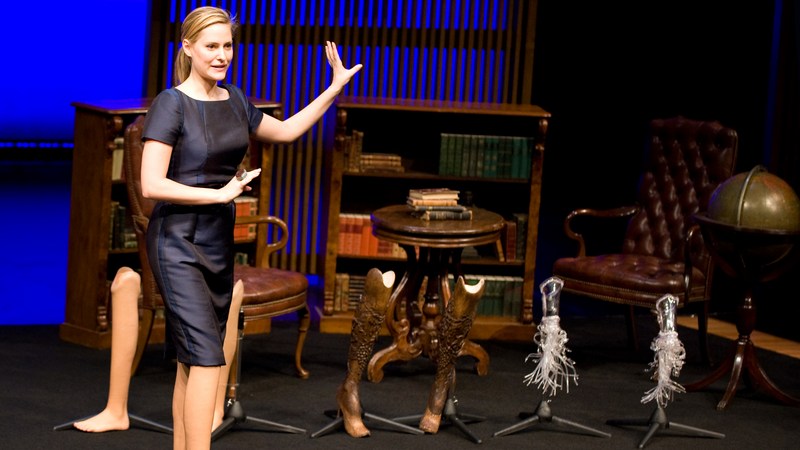
I saw a video of Aimee Mullins, A record-breaker at the Paralympic Games in 1996, Aimee Mullins 
has built a career as a model, actor and advocate for women, sports and the next generation of prosthetics.


She explained her objective to change the mind of people, even to the youngers, to ask at the world what is really the definition of disabled. 

For that, she did a conference to talk about the importance to the art and poetry, to reinvent the prosthetics, to provoque the senses.


I think this woman is incredible, she avanced the project to improve the prothetics science and awake the world about this.

She compared prosthetic legs to eyeglasses, and in the same way that we wear designer eyeglasses she has designer legs (she was wearing her 4-inch heel legs for the talk). She made it clear that with enough attitude you could pull off anything as she left the crowd dumbstruck with her presence.

https://www.ted.com/talks/aimee_mullins_prosthetic_aesthetics/transcript?language=en


mercredi 4 janvier 2017

The roman medicine, Part 2

The big names of the Roman medicine


The history of the Roman medicine is marked by important and famous characters. It is thanks to them that the medicine evolved and spread. These big names of the medicine left an indelible imprint, and today, we still remember them.

First of all, it is important to speak about Hippocrates, even if it is not a Roman doctor: indeed, foundations even of the medicine are owed to him, and the Roman medicine rests widely on its works and discoveries. Hippocrates is an illustrious Greek doctor, born in the island of Cos towards 460 b. J.C. and died to Larissa (city of Thessaly, in the center of Greece) towards 370 b. J.C ..  He is a member of the family of Asclépiades, of priests doctors who assert coming down from Asclépios, Greek god of the medicine and worship him.


Having been the follower of the philosophers Democritus and Gorgias, Hippocrates practises the medicine to Cos and bases the famous school of medicine of the same name there. The medicine was before its works an assembly of religious beliefs. He made a scientific discipline. This is why we nickname him "the father of the medicine" For him the medicine is based on the observation and the reasoning. It is convinced that any disease is caused by an imbalance between four elements: fire, water, air and earth.

He is considered the author of an impressive quantity of medical works, but many of these texts were attributed to him wrongly. Hippocrates is also the author of the oath who bears his name.

---

Asclepiades of Bithynie or Prusa is Roman one doctor of origin Greek born in Prusa (current Turkey) in 124 b. J.C. and died in b av. J.C .. Having studied in Greece, Asclepiades bases a private school of medicine in Rome. It is the first one in the Roman Republic.


According to him, the best way to fight against the disease is to have a healthy lifestyle: he advocates baths, diets, sport, rather than medicine. He denies the theories of Hippocrates and moves forward that his method is the only one to make effect.

---

Aulus Cornelius Celsus is of Roman origin. It is not a doctor but a polygraph (it is an author writing on several sometimes very different subjects.). Contrary to most of the people writing about the medicine, Celse expresses himself and writes in Latin. Celsus is the author of the biggest treaty of medicine of the Antiquity. He resumes all the knowledges accumulated up to there regarding medicine. His work, de re medica, is very well organized. It is only a part of an immense work handling multiple aspects of the Roman company such as the agriculture or the army.

Celse shines with his logic, his common sense and especially with his objectivity: indeed, he never lets show through his preferences through his papers and just brings back the truth such as it is. We consider that Celse lived during the reign of the Emperor Augustus, but it is not absolutely sure.


---

Finally, Claudius Galenus is a Roman doctor of Greek origin been born in Asia Minor, in Pergamon (current Turkey), in 131, and disappeared in 201 in Rome or in Sicily. He is generally recognized as the biggest antique doctor after Hippocrates and as the biggest of Roman Empire.  His father urges him to study of medicine while he is seventeen-year-old. Thus he undertakes in this way and, in 21 years, makes a gigantic journey off the Mediterranean Sea and receives the lessons of big doctors there. He becomes then the doctor of the gladiators to Pergamon. But at 33 years old, the ambitious doctor decides to settle down in Rome. He meets an enormous success there and becomes the doctor deprived of emperor Marcus Aurelius.


But in 167, it is urged to leave Rome. Thus he travels some time before returning in Rome to take care of sons of the emperor. He goes out in 201. Not endowed excessively for the forecast, Galien is very talented on the contrary for the diagnosis. Although studying the philosophy, the pharmacy (domain which he masters well) and the hygiene, the nerve of the medicine of Galien is the anatomy where it makes major discoveries on nerves or blood circulation in spite of some errors (Galien is convinced that it is the liver which is the center of the blood circulation).

He resumes the theory of four elements of his predecessor Hippocrates and is also inspired by Aristote. Contrary to Hippocrates, Galien does not show a modesty and is very full of his person, what many of his colleagues do not appreciate!


Some medical techniques known by Romans

We know now that Romain holds first-rate medical knowledge thanks to the results of big doctors (mixed all the same with errors), and that many specialities already exist at these people. But they are also capable of using sometimes complex techniques. Here are some examples.

The suction cup

An instrument frequently used by the Roman doctors is the suction cup. This tool allows to accelerate the cure of a sick person by appealing to the effect by revulsion, medical process which consists in handling a sick organ, in relieving congestion in him, by causing an influx of blood in a zone distant from the zone to be cured. Having produced a flame inside the suction cup, a partial space builds up itself: we can so inhale the skin and dilate the blood capillaries by placing the suction cup on the skin of the back, the breast … The Roman doctors so cure the pneumonia, the bronchitis, the pains of the back or the stomach … 
We can also practise the heavy loss with an a little bit different suction cup (evacuation of a certain quantity of blood in a therapeutic purpose.) this process totally disappeared today.


The fractures


Romain knows and practise the use of pairs of forceps: they allow the doctor to put back in place the pieces of a broken bone by towing them between crowbars. He can be also used to extract pieces of bones of the body of a patient, or even ... to crush bones or head of a foetus.


The exploration of the body

The speculum suggests the practice of a technique rather close to the endoscopy in Rome. This instrument is rather impressive and called on to an ingenious mechanism which allows to rule out effectively walls. The speculum is a medical instrument which allows to explore more easily a cavity by ruling out its walls, what widens it and the endoscopy is a process using an endoscope ( medical optical instrument), what consists in exploring certain conduits of our body, for example nostrils or bronchi.

The anesthesia

The Roman doctor knows how to anesthetize his patient: for it, he uses substances as the juice of mandrake or the atropine. These products are extracted from the mandrake, from the belladone... 
Remark 
What amazes most when we look closely at the Roman medicine, it is the knowledge which detain the doctors in materials of hygiene: even if they do not know the existence of germs, they clean their instruments after every use, in some boiled water.


To be continued for the part 3