Affichage des articles dont le libellé est Mysay. Afficher tous les articles

samedi 14 octobre 2017

Roman camp


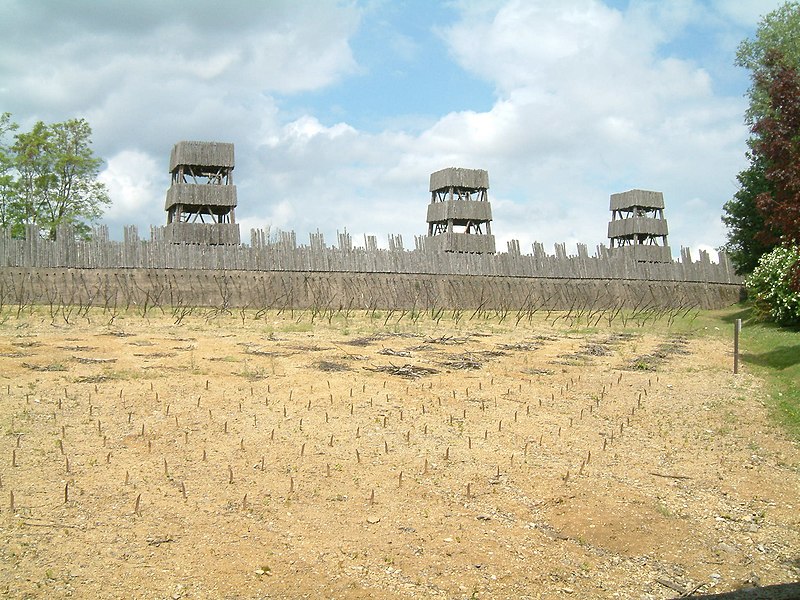
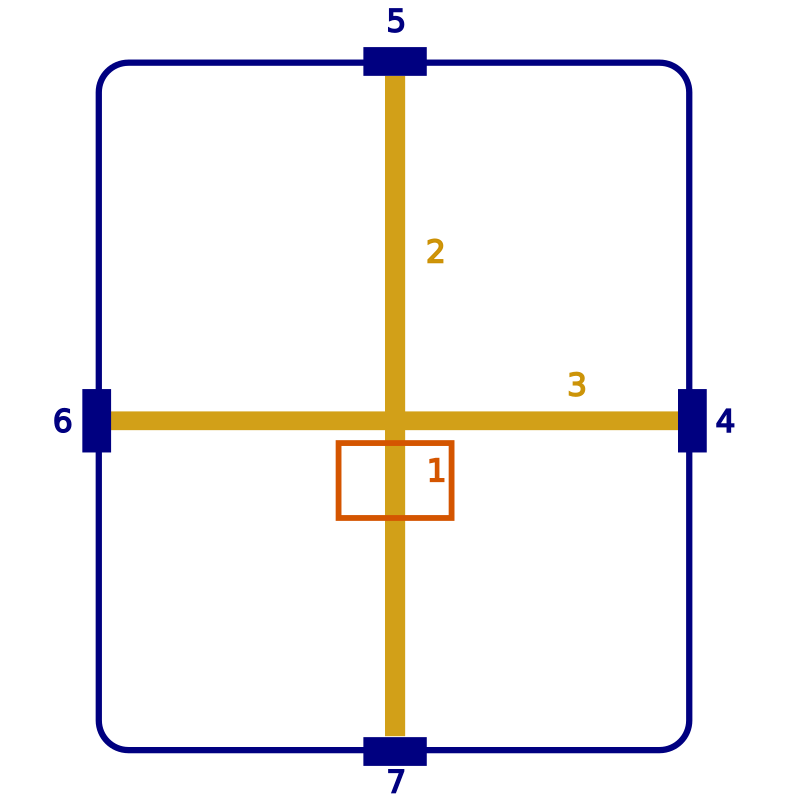
A camp of stage of eight legions (for 48 000 men, understood muleteers) has a rectangular shape of 655 on 610 meters aside approximately, is a 40 hectare surface. A camp of wintering or permanent would twice more be big.


For tactical reasons, the place is rather chosen in height. But the essential criteria are: the safe and easy access (because the camp is established at the end of the day, thus the troops are tired); the presence of a water source; sufficient meadows for the feed of horses and used beasts of burden; the most close possible ground, with enough slope for the drainage: neither rocks, nor roots. It's better to be near a wood to build the camp. But we know it where everything is stone dry.

The plan is always the same, what allows a very fast construction. The tribune and the centurions in charge of the establishment of the camp measure the ground and fix the location of the prætorium (the tent of the general), squared by 60 meters aside. The white flag crashed in this place serves as mark all around of which gets organized all the camp: ways, tents, forum and surrounding wall.  Behind the surrounding wall, a release of about sixty meters is left free to allow movements of the units, and put the first rows of tents shielded from the opposite jets.

Two main ways, the via principalis and the decumanus, get away themselves with right angle in front of the prætorium. However the number of legions the camp shelters is higher, one via parallel quintana in this via principalis is also drawn.

Crack troops camp on all sides of the prætorium, formed by foot soldiers and by riders who live in long rectangular camps divided into ten barracks, welcoming eight soldiers each. A whole century lives in a camp, established by a succession of copies-rooms. The first one is used as cloakroom to the soldiers to store their weapons and other cumbersome personal effects. The second is the barracks itself, with a fireplace and bedsteads stacked to sleep eight men of the contubernium, placed under the supervision of a leader of barracks. Every barrack consists of a room preceded by an anteroom on the ground of hard-packed surface.
Valetudinaria is medical zones incorporated into the camp from the professionalization of the armies of Auguste at least, and are the military versions of aesculapia.

   
1. Praetorium
2. Via praetoria 
3. Via principalis 
4. Porta principalis ( dexter, right ) 
5. Porta decumana 
6. Porta principalis ( senestra, left ) 
7. Porta praetoria

Domus, Part 1


The term domus is very old : it goes back to an Indo-European etymology *( dom-) which indicated the family on two generations, and fires his its origin of the root dem-, to build. The domus is thus the Roman family house, the head of the family of which bears the name of dominus. Its archaic shape is known by funerary urns found in the necropolises of the old Forum Romain which had the shape of a hut rounded off in only room. The thorough vestiges of huts found on the Palatine Hill and dated the 8th century BC confirm this very modest plan. The Etruscan influence at the end of the period of the Roman monarchy sees being born the domus with a square structure, and several rooms. However the house remains rustic, as shown by the name of the house by the word hortus (garden of plants in Latin) used in the Law of Twelve Tables and translating the still narrow link between the house and its closed garden. 

According to Roman tradition, the Law of the Twelve Tables was the legislation that stood at the foundation of Roman law. The Tables consolidated earlier traditions into an enduring set of laws.


vendredi 13 octobre 2017

The roman way, Part. 1


To -400, Romain used runways to move of Rome towards the surrounding cities.  The raid of the  Gauls of Brennus, which will turn out disastrous for Romain in -390, will so be the first revelation of the ineffectiveness of the defensive system of Rome, owed mainly to the slowness of progress of the troops on the paths of the period. The necessity of a better defense allied to a will of expansion and hegemony on Italy leads a Roman Republic still fragile and threatened from the outside to set up a network of robust stone and relay roads, better adapted to its needs. These axes allowed a faster and easier circulation for the storekeepers), but also the quick transfers of the troops.


The first way was built in -312 by Appius Claudius Caecus to connect Rome to Capua : the  Via Appia, the Appian way. At the end of the Roman Republic, the whole territory of the Italian peninsula was provided with these main trunk roads, every road bearing the name of the consul which had created it. These ways were paved only exceptionally: inside cities and in their neighborhoods ( excepted the  Appia way, who was gradually paved on all her route. Somewhere else sands and aggregates were taken in open quarries nearby. It seems that of the ground  was able to cover pavements to limit the discomfort. Somewhere else, these roads were made by sand or  by gravels, all this in a hole and covered with a stony paving stone.


mercredi 17 mai 2017

Medieval Latin

Medieval Latin had ceased to be a living language and was instead a scholarly language of the minority of educated men in medieval Europe used in official documents more than for everyday communication. That resulted in two major features of Medieval Latin compared with Classical Latin. First, many authors attempted to "show off" their knowledge of Classical Latin by using rare or archaic constructions, sometimes anachronistically (haphazardly mixing constructions from Republican and Imperial Latin, which in reality existed centuries apart). Second, many lesser scholars had a limited grasp of "proper" Latin or were increasingly influenced by Vulgar Latin, which was mutating into the Romance languages.

Word order usually tended towards that of the vernacular language of the author, not the artificial and polished word order of Classical Latin. Conversely, an erudite scholar might attempt to "show off" by intentionally constructing a very complicated sentence. Because Latin is an inflected language, it is technically possible to place related words at opposite ends of a paragraph-long sentence, and owing to the complexity of doing so, it was seen by some as a sign of great skill.
Typically, prepositions are used much more frequently (as in modern Romance languages) for greater clarity, instead of using the ablative case alone. Further, in Classical Latin the subject of a verb was often left implied, unless it was being stressed: videt = "he sees". For clarity, Medieval Latin more frequently includes an explicit subject: is videt = "he sees" without necessarily stressing the subject.
Various changes occurred in vocabulary, and certain words were mixed into different declensions or conjugations. Many new compound verbs were formed. Some words retained their original structure but drastically changed in meaning: animositas specifically means "wrath" in Medieval Latin while in Classical Latin, it generally referred to "high spirits, excited spirits" of any kind.


Owing to heavy use of biblical terms, there was a large influx of new words borrowed from Greek and Hebrew and even some grammatical influences. That obviously largely occurred among priests and scholars, not the laity. In general, it is difficult to express abstract concepts in Latin, as many scholars admitted. For example, Plato's abstract concept of "the Truth" had to be expressed in Latin as "what is always true". Medieval scholars and theologians, translating both the Bible and Greek philosophers into Latin out of the Koine and Classical Greek, cobbled together many new abstract concept words in Latin.

Many striking differences between classical and medieval Latin are found in orthography. Perhaps the most striking difference is that medieval manuscripts used a wide range of abbreviations by means of superscripts, special characters etc.: for instance the letters "n" and "s" were often omitted and replaced by a diacritical mark above the preceding or following letter. Apart from this, some of the most frequently occurring differences are as follows. Clearly many of these would have been influenced by the spelling, and indeed pronunciation, of the vernacular language, and thus varied between different European countries.

Following the Carolingian reforms of the 9th century, Carolingian minuscule was widely adopted, leading to a clear differentiation between capital and lowercase letters.
A partial or full differentiation between v and u, and between j and i.
The diphthong ae is usually collapsed and simply written as e (or e caudata, ę); for example, puellae might be written puelle (or puellę). The same happens with the diphthong oe, for example in pena, Edipus, from poena, Oedipus. This feature is already found on coin inscriptions of the 4th century (e.g. reipublice for reipublicae). Conversely, an original e in Classical Latin was often represented by ae or oe (e.g. aecclesia and coena), also reflected in English spellings such as foetus.
Because of a severe decline in the knowledge of Greek, in loanwords and foreign names from or transmitted through Greek, y and i might be used more or less interchangeably: Ysidorus, Egiptus, from Isidorus, Aegyptus. This is also found in pure Latin words: ocius ("more swiftly") appears as ocyus and silva as sylva, this last being a form which survived into the 18th century and so became embedded in modern botanical Latin (also cf. Pennsylvania).
h might be lost, so that habere becomes abere, or mihi becomes mi (the latter also occurred in Classical Latin); or mihi may be written michi, indicating that the h had come to be pronounced as k or perhaps kh. This pronunciation is not found in Classical Latin.
The loss of h in pronunciation also led to the addition of h in writing where it did not previously belong, especially in the vicinity of r, such as chorona for corona, a tendency also sometimes seen in Classical Latin.
-ti- before a vowel is often written as -ci- [tsi], so that divitiae becomes diviciae (or divicie), tertius becomes tercius, vitium vicium.
The combination mn might have another plosive inserted, so that alumnus becomes alumpnus, somnus sompnus.
Single consonants were often doubled, or vice versa, so that tranquillitas becomes tranquilitas and Africa becomes Affrica.
Syncopation became more frequent: vi, especially in verbs in the perfect tense, might be lost, so that novisse becomes nosse (this occurred in Classical Latin as well but was much more frequent in medieval Latin).
These orthographical differences were often due to changes in pronunciation or, as in the previous example, morphology, which authors reflected in their writing. By the 16th century, Erasmus complained that speakers from different countries were unable to understand each other's form of Latin.[3]

The gradual changes in Latin did not escape the notice of contemporaries. Petrarch, writing in the 14th century, complained about this linguistic "decline", which helped fuel his general dissatisfaction with his own era.

Vulgar Latin

The original written Latin language (what is today referred to as Classical Latin) was adapted from the actual spoken language of the Latins, with some minor modifications, long before the rise of the Roman Empire. As with many languages, over time the spoken vulgar language diverged from the written language with the written language remaining somewhat static. During the classical period spoken (Vulgar) Latin still remained largely common across the Empire, some minor dialectal differences notwithstanding.


The collapse of the Western Roman Empire rapidly began to change this. The former western provinces became increasingly isolated from the Eastern Roman Empire, leading to a rapid divergence in the Latin spoken on either side. In the West an even more complex transformation was occurring. A blending of cultures was occurring between the former Roman citizens who were fluent in the proper Latin speech (which was already substantially different from Classical Latin), and the new Gothic rulers who, though largely Latinised, tended to speak Latin poorly, speaking what could be considered a creole of Latin and their Germanic mother tongue.

classical latin

Classical Latin is the modern term used to describe the form of the Latin language recognized as standard by writers of the late Roman Republic and the Roman Empire. In some later periods, it was regarded as "good" Latin, with later versions being viewed as debased or corrupt. The word Latin is now taken by default as meaning "Classical Latin", so that, for example, modern Latin textbooks describe classical Latin.

Good Latin in philology is "classical" Latin literature. The term refers to the canonicity of works of literature written in Latin in the late Roman Republic and the early to middle Roman Empire: "that is to say, that of belonging to an exclusive group of authors (or works) that were considered to be emblematic of a certain genre." The term classicus (masculine plural classici) was devised by the Romans themselves to translate Greek γκριθέντες (enkrithentes), "select", referring to authors who wrote in Greek that were considered model. Before then, classis, in addition to being a naval fleet, was a social class in one of the diachronic divisions of Roman society according to property ownership by the Roman constitution. The word is a transliteration of Greek κλσις (klēsis) "calling", used to rank army draftees by property from first to fifth class.


mercredi 10 mai 2017

The Roman Medecine, Part 4

The right of the doctors

The laws

Naturally, from the arrival of the Greeks and their scientific but disastrous medicine practised by incompetent people, Romain quickly realized that the power detained by the doctors was dangerous, and that it was necessary to punish the doctors committing of serious mistakes. Laws exist for it.

Lex Aquilia

This law, dated 286 b. J.C., what explains (among others) what risks a doctor who makes a grave error by treating a slave: this law engages the responsibility of the doctor - and of the owner of the doctor if the latter is a slave - towards the owner of the badly looked slave. Generally, the doctor or his owner adjust the conflict by paying a certain sum to the owner of the slave.

Lex Cornelia de iniuriis

The law Cornelia, proposed by Sylla in 84 b. J.C., punishes every person responsible for a manslaughter. So, a doctor who uses voluntarily some poison on a patient or who hurts him with the aim of killing him, but also a person who makes or sells some poison or dangerous medicine, is criminal. Will then come to be added to this law the ban on the castration and on the abortion.

Other texts of law

Antoninus Pius limits the number of doctors by city. Severus Alexander's law modifies the status of the doctors of the emperor who pass of the rank of servants in that of the state employees, and touch fixed fees. 
The law encourages the doctor to demand unpaid fees.

The doctors's hierarchy

All the doctors of the Roman territory are not equal. The Roman law establishes a hierarchy between them. This organization is described in the Codex Theodosianus. it is about a collection collecting all the Roman laws created since the reign of emperor Constantine the Great. it was drafted by Theodosius II and came into effect in 439 ap. J.C.. The leader of the Roman medical device is the comes archiatorum held by the law to be noble. In the lower rank is archiatri. These characters, paid by the State, are in charge of watching the doctors in the zone which was attributed to them and to adjust the medical conflicts. Numerous privileges are granted to them: they do not pay taxes, cannot be threatened by the law and their house cannot be occupied by military troops.

There are two types of archiatri : the archiatri palatii who preside to the palace, and the archiatri populares who provide medical care free in the most deprived. Finally, the other doctors do not benefit from the same privileges as archiatri and is under their supervision as said previously.

The medical oaths

Under Ancient Rome, several oaths must be pronounced by certain healthcare professionals. These texts are printed by a certain morality and are vector of several values as the respect for his teacher of medicine, the equality between all the patients, the respect for these, the non-transparency of its personal opinions while we exercise, the professional secrecy... The most known and most used by these oaths is the Hippocratic oath, actually created by Hippocrates, whom the doctors have to recite in front of a jury today having defended their thesis of the end of studies. it was updated and the Public health code is widely inspired by it. 
But other oaths are today compulsory: the oath of the Apothecaries of Galius which the pharmacists have to pronounce and a version of the Hippocratic oath adapted to the dental medicine or to the prison medicine are necessary for the exercise of the jobs by pharmacist, by dentist and by doctor of prisons.
Our medical oaths are so inherited from doctors of the Antiquity.

Medical education

Naturally, everything aspiring doctor has, as nowadays, need for a robust education to be able to exercise his job in a effective way. The Aesculapium deliver classes of medicine, but this learning is expensive. Most of the doctors thus learn their art with a Master. They are then to the rank of discens and can reach that of medicus having ended their apprenticeship and enough spread their clientele.

Conclusion

The works of the Greek and Roman doctors of the Antiquity influenced the medicine as a whole. Indeed, it is thanks to them that the medicine became a rigorous and scientific discipline, and either a mixture of superstitions. In the Middle Ages, no major step forward was made in the medical domain: the medicine stagnated. The doctors had to conform to the Roman Catholic Church in West: it was it which managed hospitals and universities of medicine, and many practices as the dissection were forbidden the professionals of the medicine. Really, the works of the big doctors were a recognized authority at the doctor's until the Renaissance, during which several theories were declared inaccurate, even if the old texts were always the bases on which they leaned. Finally, it is that from the XVIIIth century when the medicine was revolutionized and set a new face, among others thanks to the highlighting of the existence of germs, to the evolution of the surgical practices which makes them less dangerous and more adapted to the problems of the patient, to the creation of devices using the electricity, then the electronics who allow an automated, mechanized treatment. In spite of these decisive changes, the Roman doctors left indelible tracks in our current practices, for example through the etymology of certain terms, the medical oaths, the caduceus... And in the course of the evolution of the medicine, we shall always know how to remember their indisputable contribution in our scientific knowledge.

vendredi 3 février 2017

The Roman Medecine, Part 3

Medecine and Greco-Roman mythology

As in most of the disciplines that they practise on a daily basis, Romain connect several gods with the medicine, especially as it was perceived for a long time by them as something being only of the religion and the superstitions. The god of the medicine strictly speaking is the same at the Greeks or at Romain, the simply named in a different way: Asclepius / Aesculapius. 

Esculape is thus a specific god in the medicine and in the health (besides the medicine, the god Apollo possesses diverse attributes which make that he is not exclusively the god of the medicine).

The legend of Esculape

There are several legends around the character of Asclepius, but I am going to mention only the most known. Asclepius is thus the son of the god Apollo and of the mortal Coronis his mistress. When her mother is pregnant of him, she deceives Apollo with an other one mortal of the name of Ischys, a prince of Arcadia. Apollo does not delay learning the infidelity of Coronis: a white crow comes to announce it to him. In his anger, the god colors with black his feathers. Diane, twin sister of Apollo, punishes the unfaithful by killing her of one of her arrows. Apollo takes care personally of Ischys. But the god realizes that Coronis was pregnant: he thus extracts the baby, Asclepius, from the stomach of his ex-mistress sacrificed on the funeral stake.

Asclepius is entrusted to the centaur Chiron asked to take care of his education. This centaur, excellent teacher, having learnt the medicine of Apollo, transmits himself his medical knowledge to the child. So, Asclepius reaches a high level in the practice of the medicine: he knows how to prepare medicine, potions and ointments, but also use the surgery or recognize the plants which allow to cure. The goddess Athena offers to Asclepius a particular blood: that of the Gorgon Meduse. it confers him the power of life and death on whoever. He uses it frequently to resuscitate mythological characters. However, Hades does not see it of a good eye: as god of Hell, he becomes alarmed to see that the deaths are more and more rare. Zeus remedies it in a radical way: he eliminates Asclepius by using the lightning of Cyclopses. Apollo, naturally saddened by the death of his son, eliminates in return the Cyclopses. For this crime, Zeus condemns him to serve king Admetus of Epirus in slave. Zeus decides nevertheless to make Asclepius be reborn as immortal god of the Medicine, a completely friendly god and quack, very popular in the Greek and Roman peoples.

The worship of Asclepius

The cult of the god Asclepius appeared, from the classic age, in Greece. It is admitted that the first temple ( Asklepeion) which is dedicated to him is in the city of Trikkala, in the Thessaly. There is also Asklepeion to Pergame, the home town of Galius, as well as in Athens and to Cos. But the big center of the worship of Asclépios is localized to Epidaurus, place of birth supposed by the god. In 293 b. J. C., after a terrible epidemic of plague, is built the first Roman temple dedicated to the god Asclepius, on the island of the Tiber. The visitors of the temple hope most of the time for the cure of a disease. To do it, they have to cleanse themselves (fast, diet), then, entered the sanctuary browsed by not venomous snakes symbols of the god, to sleep inside: the god Asclepius intervenes in their dreams to give them the procedure. So the god is sensible to practise the medicine by "incubation". A sick person cured of its evil thanks the god by making him offering of a votive relief (relief offered to a god in sign of Gratitude). Sometimes the access to the temple is paying.

The Attributes of Asclepius

As all the gods were the most worshipped by the roman time, Asclepius possesses particular attributes. The most known by these attributes is his favorite animal, the snake, to such a point that a sort of snakes (not venomous) is called snake of Asclepius. This animal is by his side in almost all the representations of the god. Fast, very agile and endowed with a very good appetite, this snake possesses all the qualities to embody the health. Furthermore, the regular metamorphosis of the reptile symbolizes the regeneration of the life. 
As seen previously, inside Asclepius Epidaurus's sanctuary are several snakes of this type. Other one of the animals of preference of Asclepius is the mole. It is possible that in its oldest shape, Asclepius was a "god-mole". Even more connected with the earth  than the snake, the mole can most probably be one of the attributes of Esculape. There is another third animal connected to Asclepius, it is about the cock. This gallinacean symbolizes the day renewal. The sick cured by the god of the medicine sacrifice him generally a cock.

Iconography of Asclepius

The iconography is a study of the various representations of a person, an object... 

Asclepius is often represented at Roman, very often under the shape of a sculpture. Old, the god remains by means of a stick all around of which is tangled up a snake. He possesses a long beard. Sometimes, his daughter Salus and Panacea and his son Telesphoros accompany him.

The family of Asclepius

The god Asclepius has a wife, Epione, a girl of king of Cos, and not less than seven children, among whom four girls and three sons: Panacea, Salus, Iaso, Aglaea, Machao, Polidarius and Telesphoros.

-Panacea is the goddess of the universal Cure.
-Salus, relatively important character of the medicine, is the goddess of the health, of the cleanliness and the hygiene (this last term was formed from its Greek name, Hygieia).
-Iaso is the Quack.
-Machaon and Polidarius become famous during the Trojan War during which they behave as real heroes quacks just like their father.
-Finally, Telesphoros is the god of the convalescence. Which is the state of a person who recovers of a disease.

The "snake of Asclepius" in certain emblems

The snake, the emblem of Asclepius, is widely associated with the medicine today and is used to symbolize the medical professions through the caduceus of the order of the Doctors of France for example. But the snake of Asclepius is a part of other emblems of medical professions: so the emblem of the Pharmacists consists of a snake of Asclepius getting entangled around a cup of Hygieia. Replace the cup of Hygieia by a microscope, a diapason or an egg-shaped shape and you will obtain respectively emblems of analysis laboratories medical, hearing-aid specialists and midwives. The mirror which sometimes appears on these symbols represents the caution necessary for this kind of job.


Other divinities attached to the medicine

Esculape, his children and his father Apollon are not the only gods who concern the medicine: indeed, minor, very specialized and often local divinities, are worshipped in the Roman territory.

Here are some of these divinities:

-Angitia, goddess of the Cure and the Witchcraft, more particularly known in the center of Italy.
-Carna, protective divinity of the body, the internal organs in particula.
-Clitumnus, divinity quack of Umbria.
-Endovelicus, god of the Health and the Spanish and Portuguese Well-being, joined into the Roman mythology after the conquest of the Iberian Peninsula by Romans.
-Febris, protective goddess fighting against the fever and against the malaria.
-Veiovis, Etruscan goddess bound to the health.
-Lucina, divinity protecting the women who deliver, and the childbirth.
vendredi 20 janvier 2017

Hello

I don't know what to say so I say you hello !

Here in spain it's raining.
So sad.

But, I'm happy because I'm not outside...


I am sorry but I am very boring today !

I think I will finish the part 3 of the Roman medicine and not tell this nonsenses ! 

See ya !


mercredi 4 janvier 2017

The roman medicine, Part 2

The big names of the Roman medicine


The history of the Roman medicine is marked by important and famous characters. It is thanks to them that the medicine evolved and spread. These big names of the medicine left an indelible imprint, and today, we still remember them.

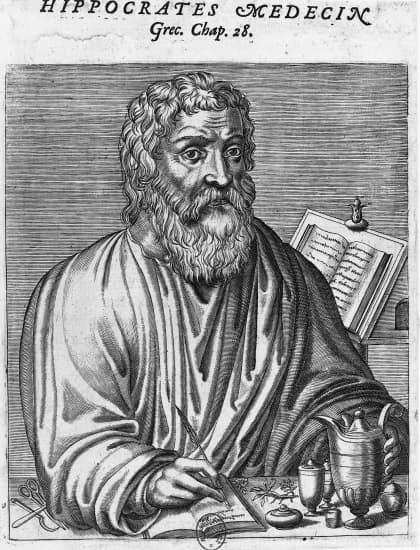
First of all, it is important to speak about Hippocrates, even if it is not a Roman doctor: indeed, foundations even of the medicine are owed to him, and the Roman medicine rests widely on its works and discoveries. Hippocrates is an illustrious Greek doctor, born in the island of Cos towards 460 b. J.C. and died to Larissa (city of Thessaly, in the center of Greece) towards 370 b. J.C ..  He is a member of the family of Asclépiades, of priests doctors who assert coming down from Asclépios, Greek god of the medicine and worship him.


Having been the follower of the philosophers Democritus and Gorgias, Hippocrates practises the medicine to Cos and bases the famous school of medicine of the same name there. The medicine was before its works an assembly of religious beliefs. He made a scientific discipline. This is why we nickname him "the father of the medicine" For him the medicine is based on the observation and the reasoning. It is convinced that any disease is caused by an imbalance between four elements: fire, water, air and earth.

He is considered the author of an impressive quantity of medical works, but many of these texts were attributed to him wrongly. Hippocrates is also the author of the oath who bears his name.

---

Asclepiades of Bithynie or Prusa is Roman one doctor of origin Greek born in Prusa (current Turkey) in 124 b. J.C. and died in b av. J.C .. Having studied in Greece, Asclepiades bases a private school of medicine in Rome. It is the first one in the Roman Republic.


According to him, the best way to fight against the disease is to have a healthy lifestyle: he advocates baths, diets, sport, rather than medicine. He denies the theories of Hippocrates and moves forward that his method is the only one to make effect.

---

Aulus Cornelius Celsus is of Roman origin. It is not a doctor but a polygraph (it is an author writing on several sometimes very different subjects.). Contrary to most of the people writing about the medicine, Celse expresses himself and writes in Latin. Celsus is the author of the biggest treaty of medicine of the Antiquity. He resumes all the knowledges accumulated up to there regarding medicine. His work, de re medica, is very well organized. It is only a part of an immense work handling multiple aspects of the Roman company such as the agriculture or the army.

Celse shines with his logic, his common sense and especially with his objectivity: indeed, he never lets show through his preferences through his papers and just brings back the truth such as it is. We consider that Celse lived during the reign of the Emperor Augustus, but it is not absolutely sure.


---

Finally, Claudius Galenus is a Roman doctor of Greek origin been born in Asia Minor, in Pergamon (current Turkey), in 131, and disappeared in 201 in Rome or in Sicily. He is generally recognized as the biggest antique doctor after Hippocrates and as the biggest of Roman Empire.  His father urges him to study of medicine while he is seventeen-year-old. Thus he undertakes in this way and, in 21 years, makes a gigantic journey off the Mediterranean Sea and receives the lessons of big doctors there. He becomes then the doctor of the gladiators to Pergamon. But at 33 years old, the ambitious doctor decides to settle down in Rome. He meets an enormous success there and becomes the doctor deprived of emperor Marcus Aurelius.


But in 167, it is urged to leave Rome. Thus he travels some time before returning in Rome to take care of sons of the emperor. He goes out in 201. Not endowed excessively for the forecast, Galien is very talented on the contrary for the diagnosis. Although studying the philosophy, the pharmacy (domain which he masters well) and the hygiene, the nerve of the medicine of Galien is the anatomy where it makes major discoveries on nerves or blood circulation in spite of some errors (Galien is convinced that it is the liver which is the center of the blood circulation).

He resumes the theory of four elements of his predecessor Hippocrates and is also inspired by Aristote. Contrary to Hippocrates, Galien does not show a modesty and is very full of his person, what many of his colleagues do not appreciate!


Some medical techniques known by Romans

We know now that Romain holds first-rate medical knowledge thanks to the results of big doctors (mixed all the same with errors), and that many specialities already exist at these people. But they are also capable of using sometimes complex techniques. Here are some examples.

The suction cup

An instrument frequently used by the Roman doctors is the suction cup. This tool allows to accelerate the cure of a sick person by appealing to the effect by revulsion, medical process which consists in handling a sick organ, in relieving congestion in him, by causing an influx of blood in a zone distant from the zone to be cured. Having produced a flame inside the suction cup, a partial space builds up itself: we can so inhale the skin and dilate the blood capillaries by placing the suction cup on the skin of the back, the breast … The Roman doctors so cure the pneumonia, the bronchitis, the pains of the back or the stomach … 
We can also practise the heavy loss with an a little bit different suction cup (evacuation of a certain quantity of blood in a therapeutic purpose.) this process totally disappeared today.


The fractures


Romain knows and practise the use of pairs of forceps: they allow the doctor to put back in place the pieces of a broken bone by towing them between crowbars. He can be also used to extract pieces of bones of the body of a patient, or even ... to crush bones or head of a foetus.


The exploration of the body

The speculum suggests the practice of a technique rather close to the endoscopy in Rome. This instrument is rather impressive and called on to an ingenious mechanism which allows to rule out effectively walls. The speculum is a medical instrument which allows to explore more easily a cavity by ruling out its walls, what widens it and the endoscopy is a process using an endoscope ( medical optical instrument), what consists in exploring certain conduits of our body, for example nostrils or bronchi.

The anesthesia

The Roman doctor knows how to anesthetize his patient: for it, he uses substances as the juice of mandrake or the atropine. These products are extracted from the mandrake, from the belladone... 
Remark 
What amazes most when we look closely at the Roman medicine, it is the knowledge which detain the doctors in materials of hygiene: even if they do not know the existence of germs, they clean their instruments after every use, in some boiled water.


To be continued for the part 3


dimanche 20 novembre 2016

The roman medicine Part. 1

Thanks to the work of the historians, we know that Romain was more moved forward regarding medicine than we could believe it.

In Rome, there were several types different from doctors, specialized in tasks or different parts of the body and having neither the same qualifications nor the same place in the hierarchy. The medical techniques used by the Roman doctors were very sophisticated in numerous domains.

Our knowledge about the medicine of this period are moreover strongly built on the objects which we drilled up to date in Roman archeological sites and which say length on the doctors who used them.

Because the medicine was a part of the everyday life of the Roman people, these people worshiped gods specific to the medicine, gods who possessed their particular legends.

As soon as the medicine spread in Roman Empire, it was necessary to regulate the profession: there were thus laws planned to allow the justice to cut in several situations in touch with the medicine.

But before explain, a little of history...

Since its birth, the Roman people use the medicine. But this medicine, traditional, is based on vague faiths and strange recipes rather than on the scientific truths, what makes it almost always ineffective. It is practised by quacks. At the same moment, the Greek medicine is very developed and follows scientific principles inspired by the researches for Hippocrates and by others.


But it is going to change the end of the IIIth century b. J.C. Indeed, competent doctors, all of Greek origin, make their appearance in Rome, what is one of the facets of the movement of the Hellenism (Greek civilization having settled down in a foreign country in Greece, here Ancient Rome).

The first one who left his track is the deprived doctor Archagathus, of Sparta, in 219 b. J.C. Already, traditionalists, whom famous Cato the Elder, rebel (Cato is an ancient consul appointed supreme a magistrate and Roman writer been born in 234 b. J.C. and died in 149 b. J.C. It is known for its traditionalism, its refusal of the Hellenism, but also for its treaty of agriculture ).


However, more and more doctors settle down, and the medicine eventually spreads almost everywhere

Nevertheless, it is only at the beginning of Ier century b. J.C. that is established the first school (private) of medicine in Rome. It is Asclepiades of Bithynia's work. The first official school of medicine, or scola medicorum, as for it, will be created in 14 af. J.C. at the end of the reign of the Emperor Augustus (63 b. J.C.-14 af. J.C.). Cornelius Celsus, the only one Roman of origin to have left a real imprint in the medical, brilliant domain by its objectivity and its common sense, writes at that time the biggest treaty of medicine of the Roman antiquity named de re medica, drafted in Latin, recapitulating all the knowledge medical - surgical accumulated since the works of Hippocrates.


This work also establishes bases of Latin scientific terminology (all terms associated to a notion). It will be the first one handled with medicine to be printed in 1478.

The Emperor Augustus decides during its reign to join doctors to all the military trainings: they are medici castrenses. At about II th century, the State decides to create a system of social work: so, he sets up hospitals where public doctors, paid by the state itself, provide medical care free in the most deprived. Imperial doctors also exist.

In the IIth century, Claudius Galen's works, generally considered as the biggest Roman doctor, as well as his papers, revolutionize the medicine and the pharmacy. 
Not less than 500 works were written by the hand

The IVth century sees the State trying to regulate the profession of doctor: since the access of the doctors foreign to the citizenship under Julius Caesar, their rights were excessive. So, its establishes a hierarchy between the doctors. This system continues until the fall of Roman Empire.

Different types of doctor

In the Roman society, several sorts of doctors live, which distinguish themselves by their speciality and\or by the status of the patients after which they look.

  • The general practitioner is the most wide-spread: it is capable of establishing a diagnosis for any disease and has as its name indicates it general medical knowledge of all the possible affections.
  • The Roman surgeon exists: he treats the patients by operating them manually by using surgical instruments. The surgery is extremely developed at this moment by the History
  • The ophthalmologist, the specialist of the affections of eyes. He uses eye drops (generally liquid medicine, applied to eyes to handle certain problems of eyes or eyelids). Uses of the corrective glasses is still unknown.
  • The dentist can look after caries and put false teeth as bridges. The dentistry is even closer to what we know today that the other specialities in Rome.
The medicine by herbs is very used by Romain. The itinerant doctors sell remedies and creams with herbs as the fennel, the parsley, the sage, the rosemary...

There are some more other specialities.

The types of doctors by type of patients

The Roman doctors can also differ according to their patients.

  • The public doctors are taken care by the Roman State. They can look after whoever who appears at them, just like our modern public hospitals. They preside in cities and their number is limited by Antonine's laws Pickets. Some preside in Aesculapia, places dedicated to the medicine and endowed with medical equipments, but also with thermal baths, with temples …


  • We have not much knowledge on the military medicine during the Republic. But Auguste, during his reign, reorganizes the military apparatus and adds it particularly well trained doctors, them militate medici, that must make a commitment for a duration of 16 years in valetudinaria, military counterparts of aesculapiaThere is a hierarchy between them: an administrator, doctors connected with the legion, with the troop, etc. These doctors must be capable of looking after any war wound.
  • The private medicine is spread in Rome: many owners possess their own doctors, whom they feed and maintain. All the leading characters surrounded themselves with private doctors. To the imperial palace preside medici palatini, particularly endowed and often very well paid by the emperor.


  • Most of the Roman doctors are slaves or emancipated slaves (the latter are more estimated for important characters) and are native of Greece or surrounding regions. There are also itinerant doctors: these characters are named circulatores in Latin. As their name indicates it, they move of city in town, in the big gatherings of crowd generally, to sell medicine in the form of herbs, of creams … Because of the ineffectiveness of most of these remedies, this type of doctors is badly considered: we qualify them as quacks.


    To be continued for the Part 2.

    Barcelona

     I have been talking too much to Italy... 

    So today I will talk about

    Barcelona !


    This city is in Spain (noooo ? ) in Catalonia.

    Barcelona has his history already since the Roman Empire, and it would be complicated explain everything, so I will just explain the different things we can see in Barcelona.

    Barcelona is separated by 10 districts :


    First, everyone know that the most impressive monument you have to see is the Sagrada Família 

    situated in the district Eixample


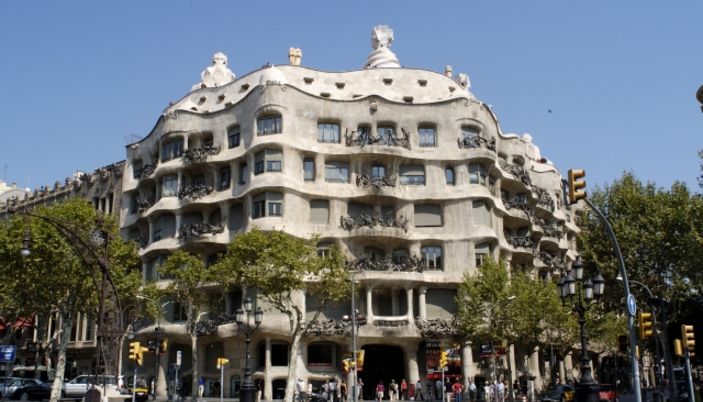
    But you can see others Gaudí's monuments like la casa Milà o casa Battló


    La casa Batlló is in the disctrict "right" of the Eixample like la casa Milà


    Another work of Gaudí is El parc Güell 


    But the thing you have to visit if your gourmand...

    Is the Chocolate Museum !


    Where your ticket is just CHOCOLATE


    You can visit too el poble espanyol ( the spanish village ) that represent the architecture of all independent comunities of spain


    vendredi 11 novembre 2016

    United Kindom, new projects ?

    As you know, I'm in love of Italy.
    I've already visited Roma, Firenze, Lucca, Ostia, Pisa, Bologna...

    But I never visited United Kindom... 
    And if even the rain is a part of this country.. 
    ( I hate the rain and the cold )

    Will UK be my new target ? 


    There is so many things to talk about United Kindom

    First, all of us know that UK is composed of four countries :
    England, Scotland, Wales and Nothern Ireland.


    It's a constitutional monarchy, and the Queen is Elisabeth II


    But United Kindom is too a big influence in the fashion.


    But that I prefer in United Kindom is his history. It's one of the most important country of the world and I hope I will visit this country soon !


    Some words : 

    Target : a fixed goal or objective